
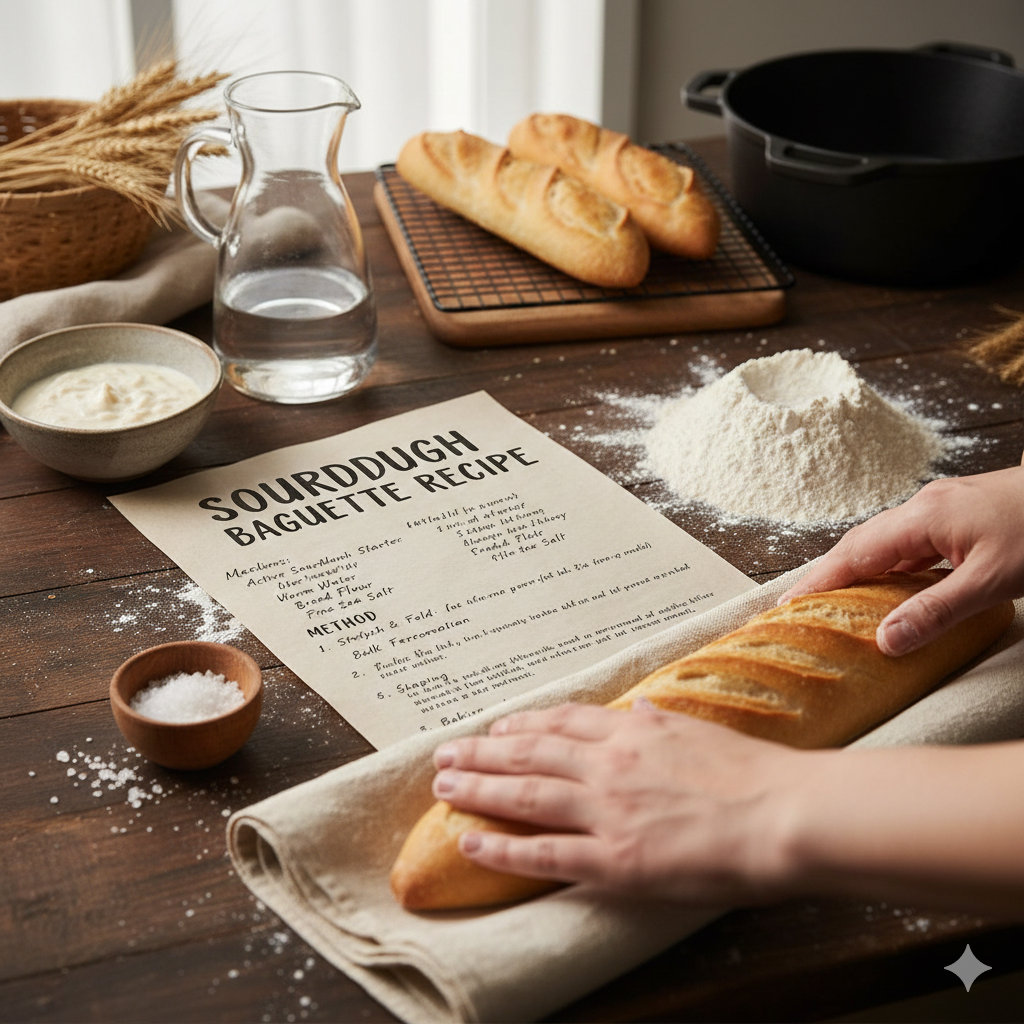
Sourdough Baguette Recipe: Mastering Artisan French Flavor at Home
Few things in baking rival the satisfaction of pulling a crisp, golden baguette from the oven and hearing that gentle crackle as it cools. When that baguette is made using natural fermentation, the experience becomes even more rewarding. This sourdough baguette recipe brings together French tradition, wild yeast fermentation, and modern home-baking techniques to help you create bakery-quality bread in your own kitchen.
Unlike commercial yeast baguettes, a sourdough baguette develops its character slowly. The flavor is deeper, the crumb more complex, and the crust noticeably crisper. This guide is designed to take you far beyond a basic formula. It explains not only how to follow a sourdough baguette recipe, but why each step matters, how to adapt it to your environment, and how to troubleshoot common problems so your results stay consistent.
By the time you finish this article, you will understand the process well enough to bake confidently, adjust hydration intelligently, and produce sourdough baguettes with professional structure and flavor.
Understanding the Essence of a Sourdough Baguette Recipe
At its core, a sourdough baguette recipe relies on three principles: fermentation, hydration, and shaping. While the ingredient list may appear minimal, the technique is where mastery lives.
A traditional baguette emphasizes simplicity, but sourdough adds another dimension. Wild yeast and lactic acid bacteria work together over time, transforming flour and water into a living dough. This extended fermentation strengthens gluten naturally, enhances digestibility, and gives the baguette its signature tang.
Unlike rustic sourdough loaves, a sourdough baguette recipe demands precision. The long, slender shape requires proper gluten development, careful handling, and accurate scoring. Every step influences the final result, from mixing to baking temperature.
Ingredients That Define a Great Sourdough Baguette Recipe
A professional sourdough baguette recipe never relies on shortcuts. Each ingredient has a clear role, and quality matters more than quantity.
Flour is the backbone of the dough. Most bakers use bread flour or a blend of bread flour and all-purpose flour to balance strength and extensibility. Water hydrates the flour and activates fermentation, while salt controls yeast activity and enhances flavor. The sourdough starter provides natural leavening and acidity.
Even though the ingredient list is short, the proportions must be exact. Small changes in hydration or starter percentage can significantly alter dough behavior. This is why weighing ingredients is essential for any serious sourdough baguette recipe.
The Role of Sourdough Starter in Baguette Dough
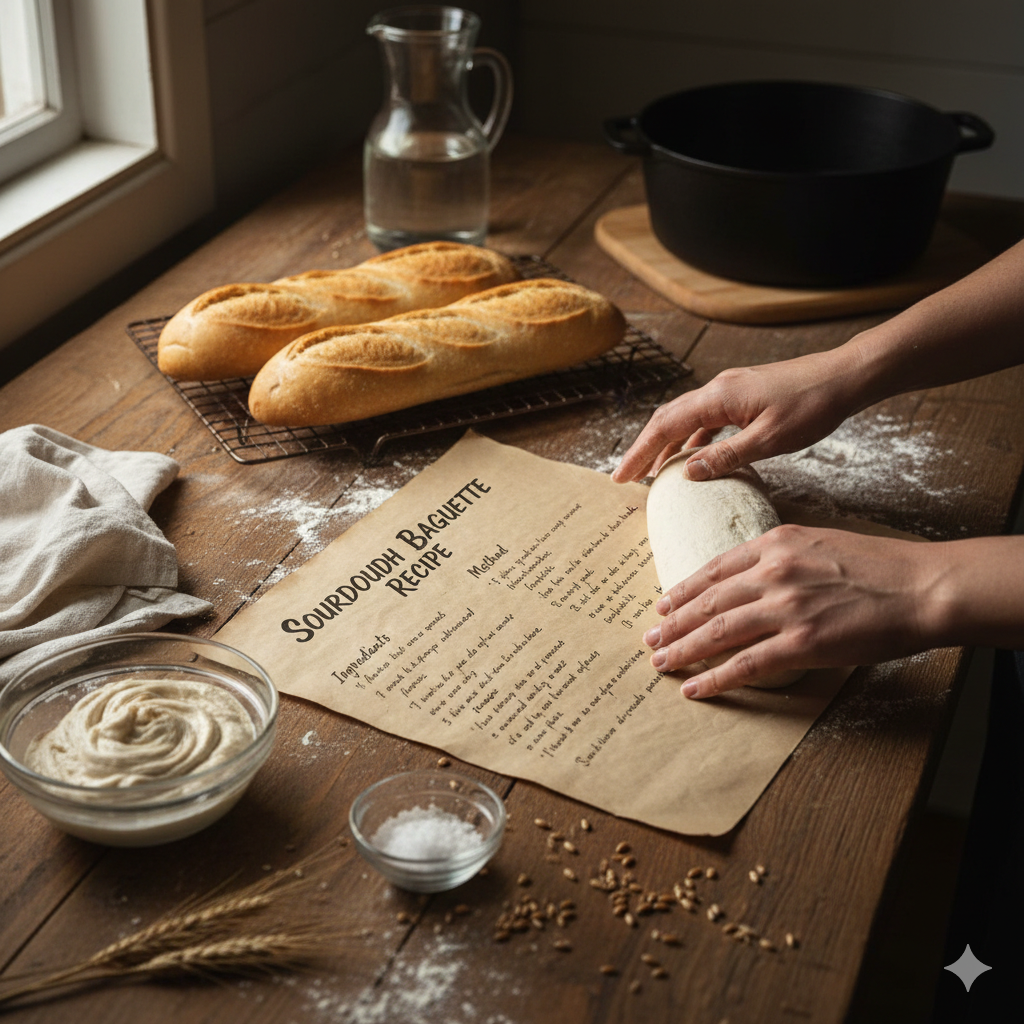
The success of a sourdough baguette recipe depends heavily on the health and maturity of your starter. A weak starter leads to dense bread, while an overly acidic starter can weaken gluten.
An ideal starter for baguettes is active, bubbly, and recently fed. It should double in volume within a few hours and smell pleasantly tangy rather than sharp. Because baguette dough ferments relatively quickly compared to large sourdough boules, the starter must be strong enough to provide lift without excessive acidity.
Using the right starter consistency also matters. A liquid starter encourages extensibility, making shaping easier, which is crucial for achieving the classic baguette form.
Mixing and Autolyse: Building the Foundation
Most high-quality sourdough baguette recipe methods begin with an autolyse stage. This is the process of mixing flour and water and allowing them to rest before adding salt and starter.
Autolyse improves gluten development naturally and reduces the need for aggressive kneading. During this rest, enzymes break down starches into sugars, which later feed fermentation. For a sourdough baguette recipe, autolyse also helps create a dough that is both strong and extensible, a balance necessary for shaping long loaves without tearing.
After autolyse, the starter and salt are incorporated gently. The dough should feel slightly tacky but not overly sticky, with a smooth surface forming as gluten develops.
Bulk Fermentation: Where Flavor Develops
Bulk fermentation is the heart of any sourdough baguette recipe. This stage allows fermentation to progress while gluten strength increases through gentle folding.
Instead of kneading, the dough is strengthened through a series of stretch-and-folds or coil folds spaced throughout the bulk phase. These folds align gluten strands and trap gas, leading to an open crumb later.
Temperature control is critical during bulk fermentation. Warmer environments speed up fermentation, while cooler conditions slow it down. A well-executed sourdough baguette recipe aims for balanced fermentation, where the dough rises moderately and develops flavor without becoming overly acidic.
Shaping Techniques for Authentic Baguettes
Shaping is one of the most challenging aspects of a sourdough baguette recipe. Unlike round loaves, baguettes demand precision and confidence.
The dough must be pre-shaped gently, rested, and then shaped into its final form. Proper shaping creates surface tension, which helps the baguette rise upward rather than spread outward. Too much pressure will degas the dough, while too little tension leads to flat loaves.
A good sourdough baguette recipe emphasizes touch over force. The dough should elongate smoothly, maintaining internal air pockets that will expand during baking.
Proofing Baguettes for Optimal Oven Spring
Proofing determines how your baguettes behave in the oven. Under-proofed dough bursts unpredictably, while over-proofed dough collapses.
A sourdough baguette recipe typically uses a shorter final proof than rustic loaves. Many bakers prefer a cold proof, which enhances flavor and makes scoring easier. During proofing, the dough should feel light and slightly puffy but still elastic.
Understanding proofing cues, such as the gentle spring-back of the dough when pressed, is essential for consistent results.
Scoring Patterns That Define a Classic Baguette
Scoring is both functional and artistic. In a sourdough baguette recipe, proper scoring controls expansion and creates the iconic baguette appearance.
Each slash should overlap slightly, forming a single line along the length of the loaf. The blade angle matters as much as depth. Shallow, angled cuts encourage the crust to open gracefully, creating pronounced ears.
Scoring must be decisive. Hesitation leads to uneven cuts and poor oven spring, even in an otherwise perfect sourdough baguette recipe.
Baking Conditions for a Crisp, Golden Crust
The baking environment plays a major role in the success of a sourdough baguette recipe. High heat and steam are essential.
Steam keeps the crust flexible during the first phase of baking, allowing maximum expansion. As the steam dissipates, the crust sets and caramelizes, producing a deep golden color and crisp texture.
A hot baking surface, such as a stone or steel, transfers heat efficiently to the dough. This combination of heat and steam is what gives a sourdough baguette its signature crackly crust.
Texture and Crumb Expectations
A well-executed sourdough baguette recipe produces a thin, shattering crust and an open yet structured crumb. The interior should be light, with irregular holes and a slightly chewy texture.
The flavor should be balanced, mildly tangy but not sour. This balance is achieved through fermentation control rather than excessive starter usage.
If your crumb is dense, fermentation or shaping may need adjustment. If the crust lacks color, baking temperature or duration may be insufficient.
Common Mistakes and How to Avoid Them
Many bakers struggle with consistency when following a sourdough baguette recipe. Common mistakes include under-developed gluten, weak starter activity, and incorrect proofing.
Another frequent issue is excessive hydration. While high hydration can improve openness, it also makes shaping difficult. A professional sourdough baguette recipe prioritizes handling and structure over extreme hydration levels.
Learning to read the dough rather than relying solely on time is the key to improvement.
Adapting the Recipe to Your Environment
Every kitchen is different. Temperature, humidity, and flour type all influence how a sourdough baguette recipe behaves.
In warmer climates, fermentation progresses faster, requiring shorter bulk times. In cooler environments, longer fermentation may be necessary. Flour protein levels also affect water absorption and dough strength.
Adapting intelligently ensures that your sourdough baguette recipe remains reliable regardless of external conditions.
Why This Sourdough Baguette Recipe Works Long Term
This sourdough baguette recipe is not a one-time formula. It is a framework that teaches technique, understanding, and adaptability.
By focusing on fermentation, shaping, and baking principles rather than rigid rules, you gain the confidence to bake consistently excellent baguettes. Over time, small refinements lead to professional-level results.
Mastery comes not from repetition alone, but from understanding why each step matters in the sourdough baguette recipe process.
Final Thoughts Before You Bake
Baking baguettes with sourdough is both a challenge and a joy. It requires patience, observation, and respect for the process. Each bake teaches something new, and each loaf reflects the care invested.
When followed thoughtfully, this sourdough baguette recipe delivers flavor, texture, and visual appeal that rival artisan bakeries. More importantly, it builds skills that extend far beyond baguettes into all areas of sourdough baking.
Frequently Asked Questions
How long does a sourdough baguette recipe take from start to finish?
Most sourdough baguette recipe processes take between 18 and 24 hours, including fermentation and proofing. Active hands-on time is relatively short.
Can beginners successfully follow a sourdough baguette recipe?
Yes, beginners can succeed by focusing on dough feel rather than rushing steps. This sourdough baguette recipe emphasizes technique over complexity.
Why is my sourdough baguette dense?
Density usually results from weak fermentation, insufficient gluten development, or over-proofing. Adjusting bulk fermentation often improves results.
Should I use bread flour or all-purpose flour?
Bread flour provides more strength, which is helpful in a sourdough baguette recipe. A blend can also work depending on hydration.
How do I get better oven spring?
Proper scoring, adequate steam, and correct proofing are essential for oven spring in any sourdough baguette recipe.