Pork Belly Burnt Ends Recipe: Rich, Sticky Bites With Deep Barbecue Flavor
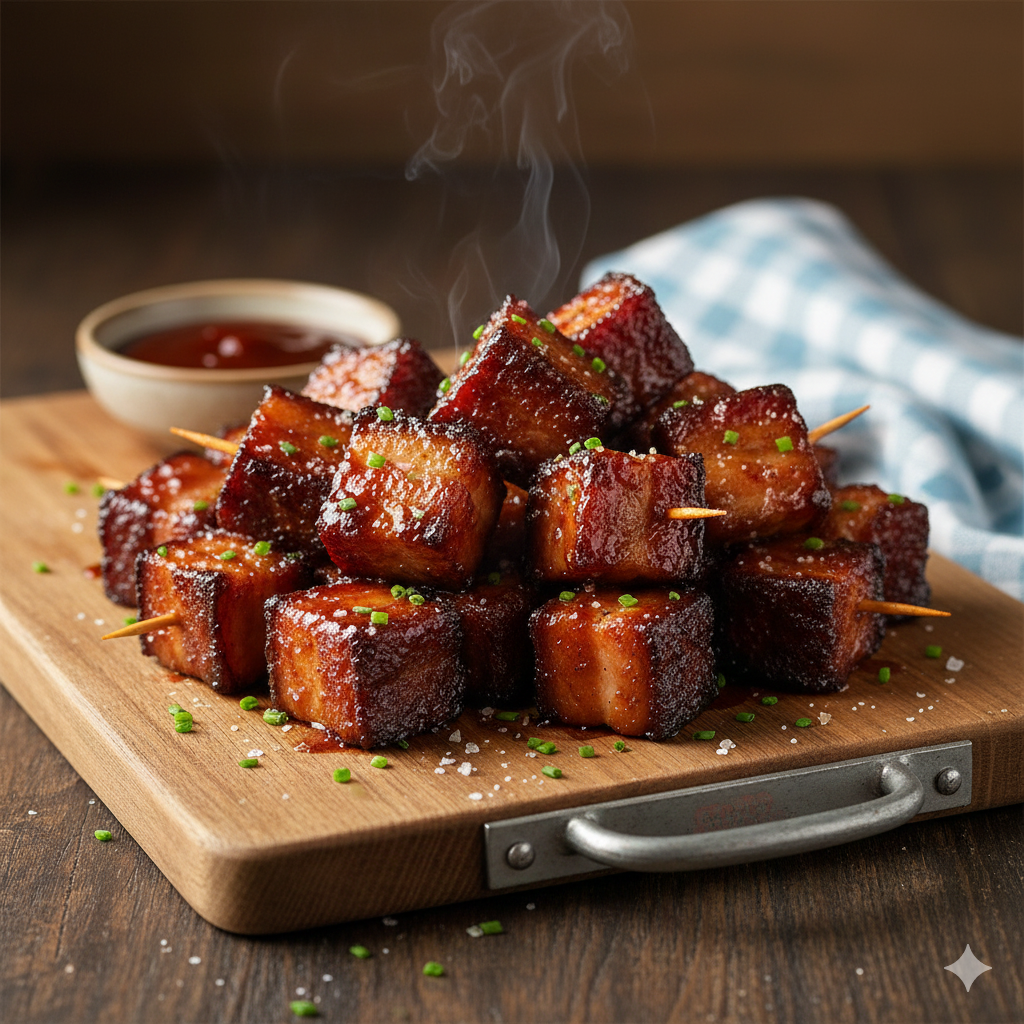
A pork belly burnt ends recipe delivers bold barbecue character in compact, bite-sized form. These small cubes bring together rendered fat, caramelized sauce, and slow-cooked meat that stays soft inside while forming a sticky outer coating. Often described as pork candy, burnt ends made from pork belly offer a balance of richness and sweetness that makes them popular for family meals, gatherings, and weekend cooks.
Unlike brisket burnt ends, pork belly versions cook more evenly and require less trimming. Pork belly contains natural fat layers that melt during cooking, creating tender cubes with a glossy finish. This guide covers classic methods, oven-friendly options, pellet smoker techniques, texture control, and timing, all while keeping the cooking process approachable.
Why Pork Belly Works So Well for Burnt Ends
Pork belly brings a unique structure to burnt ends. The layers of fat and meat soften gradually, allowing the cubes to hold shape while becoming tender. As the fat renders, it mixes with rub, sugar, and sauce, forming a rich coating.
A pork belly burnt ends recipe relies on this natural fat content rather than complex techniques. With the right temperature and patience, pork belly transforms into small, flavorful bites that stay moist without falling apart.
This cut also absorbs smoke quickly, making it suitable for both smokers and ovens.
Selecting the Right Pork Belly for Best Results
Quality pork belly matters. Look for slabs with even thickness and a good balance between meat and fat. Avoid pieces that are mostly fat or extremely lean, as both affect texture.
Skinless pork belly works best for burnt ends. The skin blocks seasoning and prevents proper caramelization. If skin-on pork belly is all that is available, removing the skin before cubing improves results.
Fresh pork belly provides better flavor than pre-seasoned or cured options.
Preparing Pork Belly Cubes the Right Way
Cutting pork belly into uniform cubes ensures even cooking. One-inch cubes work well, allowing enough surface area for sauce while keeping the inside soft.
Before seasoning, pat the cubes dry. This helps the rub stick and improves surface texture during cooking.
A dry rub made with brown sugar, salt, and mild spices builds flavor early in the cooking process. Sugar supports caramelization later, while salt draws moisture to the surface.
Understanding the Flavor Base of Burnt Ends
The flavor of pork belly burnt ends comes from layers built over time. The rub sets the foundation. Smoke or oven heat develops depth. Sauce and glaze finish the process.
Brown sugar adds sweetness. Honey creates shine. Barbecue sauce adds tang. Apple cider vinegar balances richness. Each element plays a role without overpowering the pork.
A pork belly burnt ends recipe works best when flavors stay balanced rather than heavy.
Smoked Pork Belly Burnt Ends Recipe for Traditional Barbecue Taste
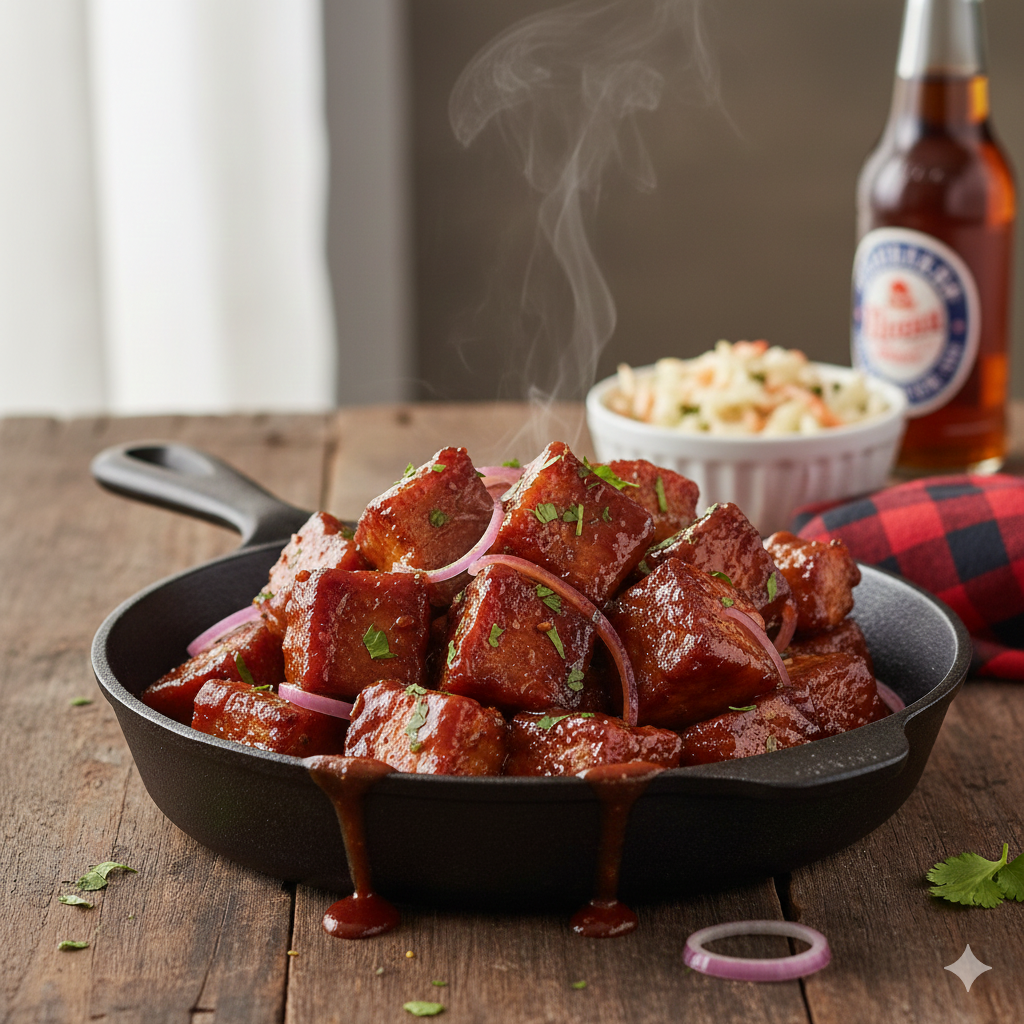
A smoked pork belly burnt ends recipe offers the deepest barbecue character. Smoke penetrates the cubes early, setting the tone for the final result.
Cooking starts at a lower temperature to allow smoke absorption. Wood choices such as apple or hickory pair well with pork. The cubes cook uncovered during this phase, developing color and texture.
Once the surface sets, the cubes move into a covered pan with sauce and sugar. This stage softens the meat further and builds the glaze. The final uncovered cook tightens the sauce, creating sticky, glossy burnt ends.
Pork Belly Burnt Ends Pellet Smoker Method Explained
Pellet smokers simplify the smoking process. They maintain steady heat and consistent smoke, which suits pork belly well.
A pork belly burnt ends pellet smoker setup usually starts around a moderate temperature. The cubes stay on the grill until they absorb enough smoke and begin to brown.
After this stage, the cubes move to a disposable pan with sauce, honey, and butter. Covered cooking allows fat to render fully. The final uncovered stage thickens the glaze and adds surface texture.
Pellet smokers produce clean smoke, keeping flavors smooth rather than harsh.
Pork Belly Burnt Ends Without a Smoker
Not everyone has access to a smoker. Pork belly burnt ends without a smoker still deliver satisfying results when cooked carefully.
The oven replaces smoke with controlled heat. While smoky flavor is lighter, seasoning and sauce compensate.
To mimic barbecue depth, some cooks add a small amount of liquid smoke to the sauce. This step remains optional.
Cooking uncovered first helps develop surface color. Covering the pan later softens the cubes and blends flavors. A final uncovered stage thickens the glaze.
Pork Belly Burnt Ends Oven Recipe With Reliable Timing
A pork belly burnt ends oven recipe focuses on temperature control and patience. Preheating the oven ensures even cooking from the start.
The pork belly cubes roast uncovered to develop color. This stage sets texture. Afterward, the cubes move into a pan with sauce and sugar, covered tightly to prevent drying.
The final uncovered cook allows sauce to cling and thicken. Watching closely during this stage prevents burning.
Many home cooks prefer the oven method because it offers consistency and convenience.
How Long to Cook Pork Burnt Ends in Oven
Timing depends on cube size and oven accuracy. In most cases, pork burnt ends take between two and three hours in the oven.
The first phase focuses on surface texture. The covered phase allows tenderness to develop. The final phase tightens the glaze.
Checking texture matters more than strict time. Properly cooked burnt ends feel soft when pressed but hold shape.
Achieving Crispy Pork Belly Burnt Ends
Crispy pork belly burnt ends require attention during the final stage. Sauce thickness, oven temperature, and exposure all matter.
Removing foil during the last stage allows moisture to escape. Slightly increasing heat helps the glaze set without burning.
Stirring gently prevents sticking while keeping cubes intact.
The goal is a sticky outer layer with light crisp edges, not hard crusts.
Sauce Choices and Glaze Balance
Barbecue sauce selection shapes the final taste. Sweet sauces pair well with pork belly’s richness. Tangy sauces cut through fat.
Honey adds shine and smooth sweetness. Brown sugar thickens glaze as it melts. A splash of apple cider vinegar balances sweetness.
Mixing sauce with rendered fat in the pan creates a rich coating that clings to each cube.
Texture Control Through Temperature and Timing
Texture defines good burnt ends. Too much heat early causes dryness. Too little heat late prevents glaze formation.
Moderate heat early allows fat to melt gradually. Covered cooking softens meat. Uncovered cooking firms the exterior.
Resting the cubes briefly after cooking allows glaze to set.
Serving Pork Belly Burnt Ends for Family Meals
Pork belly burnt ends work well as a main dish or shared platter. They pair with simple sides such as potato salad, slaw, or vegetables.
Serving them warm keeps texture at its best. The glaze thickens as it cools, so timing matters.
Burnt ends also reheat well when stored properly.
Storing and Reheating Leftover Burnt Ends
Leftover pork belly burnt ends keep well in an airtight container. Refrigeration maintains texture for several days.
Reheating in the oven or pan restores glaze better than microwaving. Gentle heat prevents sugar from burning.
Adding a small splash of sauce during reheating refreshes moisture.
Common Mistakes to Avoid
Overcrowding the pan prevents proper caramelization. Cubes need space.
Skipping the uncovered stage leaves sauce thin.
High heat too early dries pork belly before fat renders.
Rushing the process reduces tenderness.
Comparing Pork Belly Burnt Ends to Brisket Burnt Ends
Pork belly burnt ends cook faster than brisket versions. Pork belly offers richer texture due to fat content.
Brisket burnt ends rely on bark and smoke depth. Pork belly versions focus on glaze and tenderness.
Both deliver strong barbecue appeal, though pork belly suits smaller batches and home kitchens.
Adjusting the Recipe for First-Time Cooks
First-time cooks benefit from oven methods. Temperature control stays simpler.
Starting with evenly sized cubes reduces guesswork.
Using a store-bought barbecue sauce simplifies flavor balance.
Experience builds confidence for smoker methods later.
Final Thoughts on Pork Belly Burnt Ends Recipe
A pork belly burnt ends recipe brings together patience, balance, and simple technique. Whether cooked in a smoker, pellet grill, or oven, the result offers rich flavor, soft texture, and sticky glaze that appeals to many tastes.
FAQs About Pork Belly Burnt Ends Recipe
Can pork belly burnt ends be made ahead of time?
Yes. Reheat gently and add sauce if needed.
Do pork belly burnt ends need to reach a specific internal temperature?
Texture matters more than numbers. Properly cooked cubes feel soft and rich.
Is foil required during cooking?
Covering during the middle stage helps tenderness.
Can burnt ends be frozen?
Freezing works, though texture softens slightly after thawing.
Why are my burnt ends greasy?
Too much fat remained in the pan. Draining excess fat before glazing helps.