Quiche Crust Recipe: Flaky, Buttery, No-Shrink Results
A reliable quiche crust recipe is the quiet hero behind every great quiche. You can have the best custard, the prettiest vegetables, and the fanciest cheese, but if the crust is soggy, shrunken, or tough, the whole slice suffers. The good news is that a truly dependable quiche crust recipe is not complicated—it’s mainly about technique: cold fat, gentle handling, proper chilling, and a smart blind-bake strategy that keeps the bottom crisp.
This guide is written to help you master a quiche crust recipe in a practical, real-kitchen way. You’ll learn what “shortcrust” and “pâte brisée” actually mean, how to choose butter versus shortening, how to prevent shrinkage, and how to blind bake without drama. You’ll also see variations—deep dish, press-in, and gluten-free options—so you can pick the quiche crust recipe that fits your time, tools, and taste. The conclusion comes right before the FAQs, and the meta title and meta description are placed at the very end as requested.
What Makes a Quiche Crust Recipe Different from Regular Pie Crust
A quiche crust recipe has one job that’s tougher than it looks: stay crisp under a wet filling. A fruit pie crust gets help from sugary fillings that thicken as they bake, but quiche filling is mostly eggs and dairy. That custard releases moisture as it cooks, which can seep into the base and soften it. That’s why quiche crust technique often leans on blind baking, sealing, or both.
Another key difference is structural strength. A quiche crust recipe needs enough sturdiness to slice cleanly and hold a tall custard without collapsing. You still want flakiness and tenderness, but you also want a base that stands up. When you balance tenderness with strength—through chilling, proper dough thickness, and a controlled bake—you get that ideal quiche crust that cuts neatly and stays crisp.
The Shortcrust Foundation Behind Every Quiche Crust Recipe
Most classic quiche crust recipe styles are based on shortcrust pastry, often called pâte brisée in French baking. “Short” refers to a crumbly, tender texture created when fat coats flour particles and limits gluten formation. Less gluten means less chew, which is exactly what you want in a quiche crust recipe: delicate, buttery, and easy to cut.
The biggest success factor is cold fat. When cold butter hits the oven, it melts and creates steam pockets that form layers. That’s where flakiness comes from in a quiche crust recipe. If the butter warms too much during mixing or rolling, it blends into the flour and you lose those layers. So the overall strategy is simple: keep everything cool, handle gently, and let the dough rest so it behaves.
Ingredients That Matter Most in a Quiche Crust Recipe
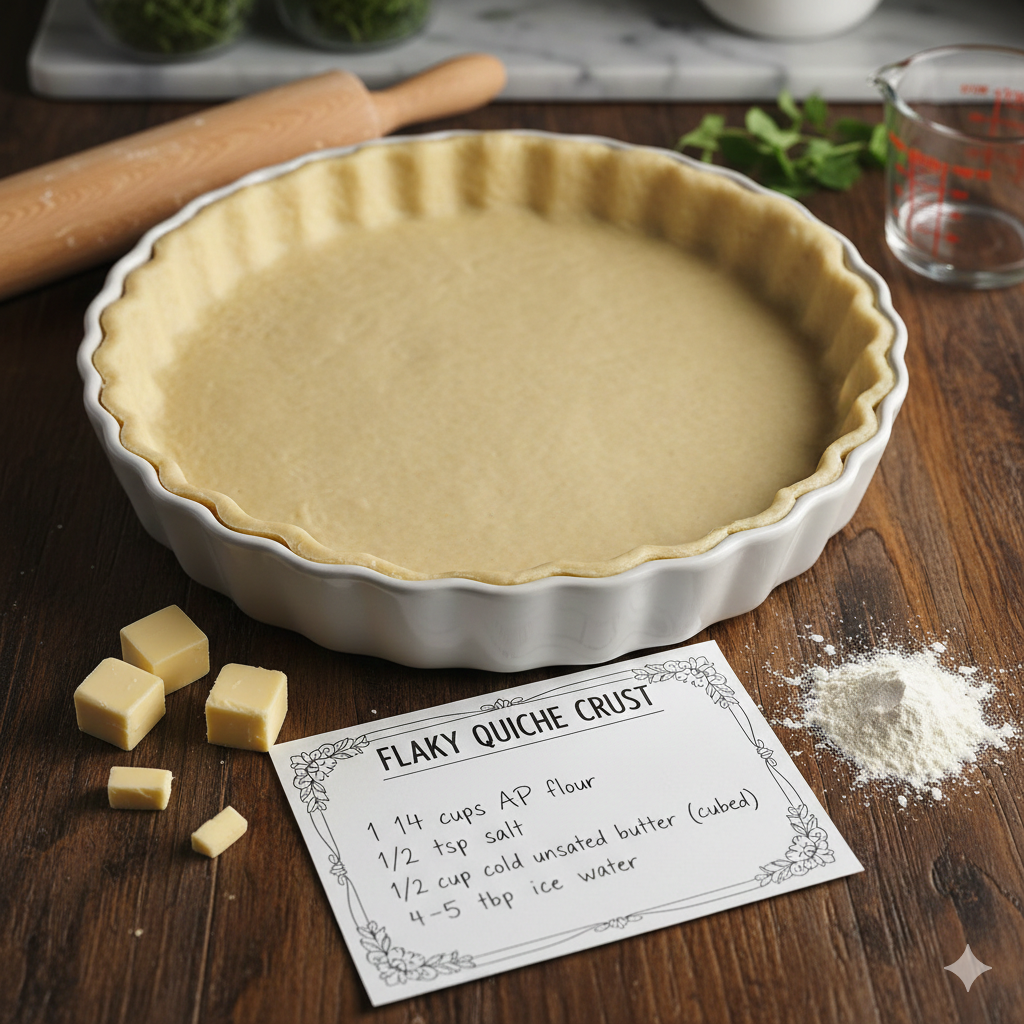
Even a basic quiche crust recipe relies on a few ingredients doing their jobs well. Flour provides structure, fat provides tenderness and flake, water brings it together, and salt brings flavor. Butter is the gold standard for flavor and flakiness, while shortening can add extra tenderness and reduce shrinkage, though it has a milder taste.
If you want the most classic quiche crust recipe, all-butter is the usual choice because it tastes rich and bakes into crisp layers. If you’re baking in a warm kitchen or you struggle with shrinking, a small portion of shortening mixed with butter can make the dough easier to handle. Regardless of fat choice, the overall goal stays the same: a dough that’s cohesive but not wet, and a crust that bakes up crisp rather than tough.
Butter vs Shortening: Choosing the Best Fat for Your Quiche Crust Recipe
An all-butter quiche crust recipe tastes unbeatable. Butter adds a clean, rich flavor and helps create those delicate flakes. The tradeoff is that butter melts quickly, so the dough needs proper chilling and careful handling. If you like a crust with distinct layers and a crisp bite, an all-butter quiche crust recipe is usually the winner.
Shortening is more stable, which can help reduce shrinkage and make the dough more forgiving. Some home bakers prefer a blend—mostly butter for flavor, with a smaller amount of shortening for structure and ease. That blended approach can be a sweet spot if you want a quiche crust recipe that’s flaky but also very dependable, especially for deep-dish quiche.
The Mixing Method: How to Get Flaky Layers Without Overworking
The mixing stage is where many quiche crust recipe attempts go wrong. Overmixing develops gluten and warms the fat, leading to a tough, dense crust. The goal is to cut the cold butter into the flour until you have a mix of small pea-sized pieces and some slightly larger chunks. Those larger chunks melt and create flaky pockets.
Water should be added gradually. In a quiche crust recipe, you want just enough water for the dough to hold together when squeezed. It should look a bit shaggy, not smooth like bread dough. Once it holds together, stop. That restraint is what keeps the crust tender. A dough that’s mixed “just enough” bakes up light and flaky.
Why Chilling Is Non-Negotiable for a Quiche Crust Recipe
Chilling isn’t an optional step—it’s one of the main reasons a quiche crust recipe turns out flaky instead of fragile. Resting the dough in the refrigerator allows the flour to fully hydrate, which makes rolling easier and prevents cracking. It also re-chills the butter, which helps create layers during baking.
A second chill after rolling and fitting the dough into the pan is just as important. When the shaped crust is cold, the edges hold their form longer in the oven, reducing slumping and shrinkage. If your quiche crust recipe has ever slid down the sides of the dish, a longer chill is often the easiest fix.
Rolling and Fitting: Getting the Right Thickness and Shape
A quiche crust recipe should usually be rolled slightly thicker than a delicate dessert pie crust because it needs to support a heavy custard filling. Too thin, and the base can soften or crack when slicing. Too thick, and it can feel doughy. A balanced thickness gives you a crust that bakes crisp yet still tastes tender.
When fitting the dough, lift and ease it into the pan rather than stretching it. Stretching is a hidden cause of shrinkage in a quiche crust recipe because the dough snaps back while baking. Let gravity help you: lower the dough into the dish, press gently into corners, and trim with enough overhang to crimp neatly. Then chill again so the shape sets.
The No-Shrink Secret: Extended Blind Bake and Smart Weighting
Shrinkage is one of the top complaints about any quiche crust recipe. It happens when the butter melts before the structure sets, and when stretched dough pulls itself back down the sides. The most reliable strategy is an extended blind bake: chill the shaped crust well, then bake it with weights long enough that the sides set firmly.
Using pie weights, dried beans, or rice helps hold the bottom and sides in place. A helpful technique is to line the crust with parchment or foil, press it snugly into the corners, then fill generously with weights. For a quiche crust recipe that holds its shape, the weighted bake needs to be long enough to dry and firm the sides, not just lightly toast the bottom.
Par-Bake vs Full Blind Bake in a Quiche Crust Recipe
Many quiche crust recipe instructions call for a par-bake, which means partially baking the crust before adding filling. This is a good middle ground because it sets structure, reduces sogginess, and still allows the crust to finish baking with the custard. Par-baking works well for most standard quiches.
A full blind bake is used when you want maximum crispness or when your filling cooks quickly and could overbake the eggs before the crust finishes. If you prefer a crisp base and you’ve struggled with soggy bottoms, a fuller blind bake can improve your quiche crust recipe results dramatically. The choice depends on your filling and your preferred crust texture.
How to Prevent a Soggy Bottom in Any Quiche Crust Recipe
The enemy of a quiche crust recipe is moisture. Blind baking is the first defense, but there are other smart moves too. One is to brush the warm crust with egg white after the weighted bake, then return it to the oven briefly. The egg white cooks into a thin barrier that helps seal the crust.
Another moisture-control trick is to avoid overly wet fillings. If you’re using mushrooms, spinach, zucchini, or tomatoes, cook or drain them first so they don’t release excess liquid into the custard. Even the best quiche crust recipe can struggle if the filling is watery. When crust technique and filling prep work together, your bottom stays crisp.
Deep Dish Quiche Crust Recipe: What Changes When the Pan Is Taller
A deep dish quiche crust recipe needs more structure because the custard is taller and heavier. That means you should keep the dough slightly thicker, chill longer, and blind bake more thoroughly so the sides don’t slump. Deep dish quiche also bakes longer, which can over-brown the rim if you don’t protect it.
For a deep dish quiche crust recipe, consider shielding the edge if it browns too fast. Also be aware that deep pans require more dough, and the dough should be pressed firmly into corners so the base isn’t too thin. When done right, deep dish quiche has that impressive height with a crust that still cuts cleanly.
Press-In Quiche Crust Recipe for When You Don’t Want to Roll
If rolling intimidates you, a press-in quiche crust recipe can be a game changer. The dough is mixed a little softer and pressed directly into the pan with your fingers. It’s still buttery and crisp, and it removes the stress of rolling and transferring.
A press-in quiche crust recipe works especially well for beginners and for rustic quiche styles. The key is pressing evenly so the base doesn’t bake thicker in the corners than the center. You still want to chill before baking, and you still want a solid blind bake. With those steps, press-in crust can be surprisingly flaky and sturdy.
Gluten-Free Quiche Crust Recipe Options That Still Taste Great
A gluten-free quiche crust recipe can be just as satisfying when you choose the right approach. Almond flour crusts are popular because they’re naturally rich and slightly nutty, and they press easily into a dish. They also brown nicely and pair well with savory fillings like spinach, bacon, mushrooms, and cheese.
The main difference is texture. A gluten-free quiche crust recipe won’t flake the same way as wheat-based pastry, but it can still be crisp and tender. For best results, press the crust firmly, pre-bake well, and let it cool slightly before filling. That helps it hold together and slice neatly.
Make-Ahead Quiche Crust Recipe Strategy for Stress-Free Baking
One of the best things about a quiche crust recipe is that it’s make-ahead friendly. You can prepare dough, chill it, and keep it in the refrigerator for a couple of days. You can also freeze dough for longer storage, which means quiche becomes a quick option whenever you need a brunch dish or easy dinner.
You can even blind bake the crust ahead of time. A fully baked quiche crust recipe base can be cooled, wrapped, and stored so you only need to mix filling and bake when ready. This is a lifesaver for holidays and gatherings because it splits the work into calm, manageable stages.
Freezing and Thawing Dough Without Losing Flake
Freezing works well for quiche crust recipe dough because cold storage protects the butter layers. Wrap the dough tightly so it doesn’t pick up freezer smells and so it doesn’t dry out. When you’re ready to use it, thaw slowly in the refrigerator so the butter stays cold and firm.
If you thaw a quiche crust recipe too quickly at room temperature, the butter can soften and smear, which reduces flakiness. Slow thawing keeps the dough workable and helps it bake up crisp. Once thawed, roll and chill the shaped crust before blind baking, just as you would with fresh dough.
Flavor Upgrades That Keep a Quiche Crust Recipe Savory
A classic quiche crust recipe is lightly salted and buttery, but you can add subtle flavor without turning it into a complicated project. A pinch of herbs, a touch of cracked pepper, or a small amount of grated hard cheese can make the crust feel more savory and intentional.
The trick is restraint. You want the quiche crust recipe to support the filling, not compete with it. Gentle flavor additions can add depth and complement fillings like ham and Gruyère, roasted vegetables, or mushrooms and thyme. If you’re experimenting, keep add-ins fine and evenly distributed so the dough still rolls and bakes well.
Common Quiche Crust Recipe Mistakes and How to Avoid Them
One common mistake is adding too much water. A wet dough becomes tough and shrinks more because extra moisture encourages gluten development. Another issue is overworking the dough, which warms the butter and creates a dense texture. A quiche crust recipe should be handled gently and quickly, with plenty of chilling built in.
Another frequent problem is under-baking the crust. If the blind bake is too short, the custard soaks in and softens the base. Many “soggy crust” complaints are really “not baked enough before filling” issues. A successful quiche crust recipe looks lightly golden at the edges and feels dry and set before you add custard.
Troubleshooting: When Your Quiche Crust Recipe Doesn’t Behave
If your quiche crust recipe cracks while rolling, it’s usually too cold or slightly too dry. Let it sit for a few minutes, then roll again gently. If it tears when transferring, patch it. Quiche is forgiving, and small repairs bake up beautifully once the custard fills in gaps.
If the crust slumps or shrinks, focus on two fixes: don’t stretch the dough when fitting, and chill longer before blind baking. Also make sure your weights press into the corners so the sides stay upright. Most quiche crust recipe problems have practical solutions once you identify the cause.
Choosing the Right Pan for Your Quiche Crust Recipe
A metal pan tends to bake a crisper quiche crust recipe because it conducts heat efficiently. Ceramic dishes look beautiful and hold heat well, but they can bake more slowly and sometimes lead to a softer bottom if the blind bake is short. Both can work; you just adjust baking time and expectations.
If you’re serious about a consistently crisp quiche crust recipe, metal is often the easiest path. If you love the look of ceramic, simply give the crust a longer blind bake and allow the quiche to cool slightly before slicing. Cooling helps the custard set and helps the crust stay cleaner.
Conclusion
A dependable quiche crust recipe is less about fancy ingredients and more about smart technique. Keep the fat cold, mix gently, rest the dough, fit it without stretching, and give it a confident blind bake so it can stand up to custard without turning soggy. When you master those basics, you gain the freedom to fill your quiche with anything—classic Lorraine flavors, vegetables, seafood, or bold cheeses—knowing the crust will hold its shape and taste buttery and crisp.
Once you’ve made this quiche crust recipe a few times, it stops feeling like baking science and starts feeling like a routine. You’ll know how your kitchen temperature affects butter, how your oven browns, and how long your favorite dish needs to set. The reward is a quiche that slices beautifully, tastes balanced, and feels made with care from the first flaky bite to the last.
Frequently Asked Questions
Do I always need to blind bake a quiche crust recipe?
Not always, but it’s highly recommended for most custard fillings. Blind baking helps your quiche crust recipe stay crisp and prevents soggy bottoms, especially when the filling is very wet.
Why does my quiche crust recipe shrink in the oven?
Shrinkage usually comes from stretching the dough while fitting, skipping proper chilling, or under-weighting during blind baking. A well-chilled quiche crust recipe with firm weights pressed into corners is far less likely to slump.
Can I use store-bought dough with a quiche crust recipe method?
Yes. Even with store-bought dough, using quiche crust recipe techniques like chilling, docking lightly, and blind baking can improve texture and prevent sogginess.
How do I keep my quiche crust recipe from getting soggy?
Par-bake the crust, consider an egg-white seal, and cook watery vegetables before adding them to the filling. These steps make your quiche crust recipe more resistant to moisture.
What’s the best flour for a quiche crust recipe?
All-purpose flour works well for most home bakers. The best results come from technique—cold fat and gentle mixing—more than specialty flour in a quiche crust recipe.