Pancake Recipe No Milk: Soft, Light Pancakes Made With Simple Pantry Staples
Making pancakes without milk is not a compromise. It is a practical, flexible way to prepare a comforting breakfast using ingredients most kitchens already have. Whether dairy is not available, not preferred, or simply not needed, a pancake recipe no milk delivers satisfying results when done properly. The batter comes together quickly, the texture stays tender, and the flavor remains balanced without relying on dairy.
This guide walks through how no-milk pancakes work, what ingredients replace milk, how water-based batters behave, and how to achieve a soft interior with a lightly browned surface. You will also find variations for egg-free options, minimal-ingredient methods, and ways to adjust taste and texture for different preferences.
Understanding Pancakes Without Milk
Traditional pancakes rely on milk mainly for moisture and mild sweetness. Removing it does not break the structure of the pancake. Flour, liquid, and a leavening agent still interact the same way. Water pancakes recipe versions depend more on proper mixing and heat control, not dairy.
A pancake recipe no milk works because flour hydrates just as well with water. Baking powder or similar agents create air pockets during cooking, which supports a fluffy pancake recipe even without milk or butter.
Flavor can be adjusted with sugar, vanilla extract, or a pinch of salt. Texture comes from how gently the batter is mixed and how long it rests before cooking.
Why This Pancake Style Works for Many Kitchens
This approach suits many needs. Some people avoid dairy. Others run out of milk unexpectedly. Some prefer lighter breakfasts without heavy ingredients. Pancakes with water instead of milk also cook faster and feel lighter on the palate.
Because the base is simple, this method adapts well to:
- Pancake recipe no milk or eggs
- Pancake recipe no milk no butter
- Simple pancake recipe without milk or baking powder
- 3 ingredient pancakes no milk
Each variation still produces homemade pancakes that feel familiar.
Core Ingredients for a Pancake Recipe No Milk
Every successful pancake batter depends on balance rather than complexity. These ingredients form the foundation.
All-purpose flour provides structure. It absorbs water and holds air created during cooking. A cup of flour is enough for a small batch.
Water replaces milk as the liquid. Room-temperature water blends smoothly into the batter and prevents clumping.
Sugar supports browning and taste. Even a small amount helps pancakes turn golden brown in the pan.
Oil replaces butter. Vegetable oil or a mild option keeps pancakes soft without adding heaviness.
Baking powder gives lift. It reacts once heated, creating air pockets that support a fluffy texture.
Salt rounds out flavor. Without it, pancakes taste flat.
Vanilla extract is optional but adds warmth and aroma, especially in dairy-free pancakes.
Mixing the Batter the Right Way
The bowl matters less than the method. Use a large mixing bowl to avoid spills and allow space for gentle stirring.
Dry ingredients should be combined first. Flour, sugar, baking powder, and salt mix evenly before liquid enters the bowl. This prevents uneven pockets in the pancake batter.
Water and oil are added slowly. Stir just until the batter comes together. Small lumps are normal. Overmixing tightens gluten and leads to flat pancakes.
Letting the batter rest for five minutes allows flour to hydrate fully. This step improves texture without adding effort.
Cooking Pancakes With Water Instead of Milk
Heat control determines success. A pan set to medium heat works best. Too hot causes burning before the inside cooks. Too cool spreads the batter thin.
Lightly grease the pan with oil. Pour batter using a measuring cup for even size.
Bubbles form on the surface after about two minutes. Once edges look set, flip gently. The second side cooks faster.
The goal is a soft center with a lightly crisp exterior. Remove pancakes when both sides reach a warm golden shade.
Achieving a Fluffy Pancake Recipe Without Milk
Fluffiness depends on air retention, not milk content. Baking powder creates gas during heating, and gentle mixing keeps that gas trapped.
Several small choices improve results:
- Fresh baking powder reacts more reliably
- Batter that rests briefly thickens naturally
- A preheated pan ensures immediate lift
If pancakes feel dense, add one tablespoon of water next time to loosen the batter slightly.
Simple Pancake Recipe No Milk for Everyday Cooking
This version suits busy mornings and quick meals. It uses basic pantry items and cooks in under fifteen minutes.
The taste stays neutral, making it suitable for syrup, fruit, or spreads. The texture stays soft even after cooling slightly.
Because there is no dairy, these pancakes also store well. Leftovers keep in an airtight container for a day and reheat gently in a pan.
Pancake Recipe No Milk No Butter Explained
Butter adds flavor, not structure. Oil fills the same role in texture. Pancake recipe no milk no butter versions rely on oil to keep the crumb tender.
Neutral oils work best. Olive oil can be used in small amounts but changes taste slightly. Vegetable oil keeps flavor balanced.
Skipping butter also reduces browning speed, which gives more control during cooking.
Pancake Recipe No Milk or Eggs
Eggs bind batter and add richness. Without them, pancakes still hold together if the batter is mixed carefully.
A pancake recipe no milk or eggs works by slightly thickening the batter and allowing proper rest time. Flour and water form enough structure when heat sets the surface.
For added softness, a teaspoon of oil more than usual helps. Some cooks add a mashed banana or a flax egg, though plain versions work well.
3 Ingredient Pancakes No Milk
Minimalist cooking does not mean poor results. A 3 ingredient pancakes no milk version usually includes flour, water, and baking powder.
Sugar can be added but is optional. These pancakes taste mild and pair well with toppings.
Because there are fewer ingredients, mixing gently matters even more. Resting the batter improves texture noticeably.
Simple Pancake Recipe Without Milk or Baking Powder
Without baking powder, pancakes rely on technique. This version produces thinner pancakes with a softer bite.
Beating the batter slightly longer introduces air. Cooking on a properly heated pan helps set that air before it escapes.
While not as tall as fluffy pancakes, this style works well for wraps or rolled fillings.
Flavor Adjustments Without Dairy
Milk contributes subtle sweetness. Without it, flavor balance matters.
Sugar levels can be adjusted slightly upward. Vanilla extract adds warmth. A pinch of salt sharpens taste.
Almond milk, oat milk, or soy milk may replace water if available, but they are not required. Water pancakes recipe versions still taste complete with proper seasoning.
Texture Differences Compared to Milk Pancakes
No-milk pancakes feel lighter and slightly crisper at the edges. The interior remains tender if cooked properly.
Milk pancakes brown faster due to sugars. Water-based pancakes need slightly more patience for color.
The difference is noticeable but not negative. Many prefer the cleaner taste of no-milk pancakes.
Making Pancakes for Breakfast Without Stress
This recipe suits early mornings. Ingredients measure quickly, cleanup stays minimal, and cooking time stays short.
The batter tolerates small measurement errors, making it forgiving for home cooks. Pancakes cook evenly and hold shape without spreading too thin.
Breakfast feels complete without complicated steps.
Storage and Reheating Tips
Cooked pancakes cool quickly. Store them flat in an airtight container.
Reheat in a pan over low heat for best texture. Microwaving works but softens the surface.
No-milk pancakes keep moisture well, even after reheating.
Common Mistakes and How to Avoid Them
Flat pancakes often come from overmixed batter. Stir only until combined.
Dry pancakes result from too much flour. Measuring flour lightly avoids this.
Uneven browning usually means inconsistent heat. Allow the pan to reheat between batches.
Adapting the Recipe for Dietary Needs
This pancake recipe no milk suits dairy-free diets naturally. Egg-free versions suit plant-based cooking.
Oil choices allow flexibility. Sugar levels adjust easily for taste preference.
Flour alternatives such as oat flour work but change texture slightly.
Serving Ideas That Work Well
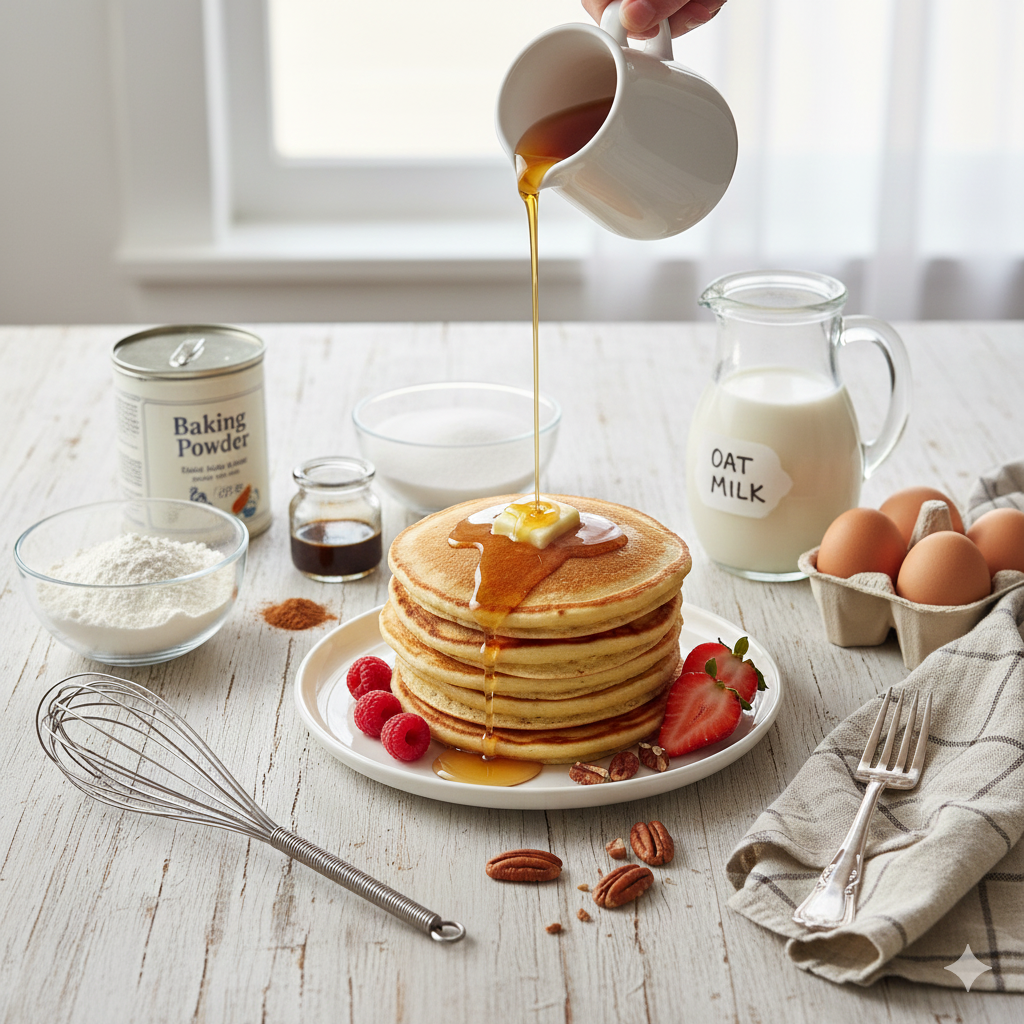
Classic syrup pairs naturally. Fresh fruit adds contrast. A light dusting of sugar works for quick serving.
Savory toppings also suit this neutral base. The pancake acts as a blank canvas.
Final Thoughts on Pancake Recipe No Milk
A pancake recipe no milk proves that good cooking relies on method, not excess ingredients. With simple staples, careful mixing, and proper heat, pancakes turn out soft, warm, and comforting.
This approach fits everyday kitchens, unexpected mornings, and varied dietary needs. It respects simplicity while delivering dependable results, making it a reliable choice for breakfast at any time.
Frequently Asked Questions
Can pancakes really taste good without milk?
Yes. Flavor depends on balance, not dairy. Proper seasoning and cooking create satisfying results.
Is water better than plant milk?
Water gives a clean taste and consistent texture. Plant milks add flavor but are optional.
Why are my pancakes not fluffy?
Old baking powder or overmixing are common reasons. Resting the batter helps.
Can I freeze these pancakes?
Yes. Cool completely, store flat, and reheat gently.
Do no-milk pancakes cook faster?
They cook at a similar pace but brown slightly slower.